The cab is the first room
Camper interiors are usually judged by their beds, kitchens and seating. Yet the dashboard is the room the driver enters first and sees on every road. It frames the windscreen, houses navigation and climate controls, and establishes the visual relationship between the commercial-vehicle cab and the living module behind it. A well-resolved surface treatment can make that transition feel intentional without replacing the original dashboard.
Why vehicle-specific geometry matters
A model name is only the beginning of a fitment decision. Generation, steering side, transmission, screen, radio, HVAC controls, storage lids and trim level can change the outline of the pieces around them. The most credible process therefore begins with the exact cab configuration and a reference image. Where evidence is incomplete, a dashboard photograph and a conservative “photo required” status are better than a universal promise.
Fitment is always subject to the exact vehicle, generation, equipment and supplied reference. Ask for confirmation when the dashboard differs.
CockpitDekor since 1998
Public brand information presents CockpitDekor, operated by Autodekor s.r.o., as a European vehicle-interior customisation specialist with production experience dating from 1998. The offer covers vehicle-specific dashboard and cockpit trim directions for passenger cars, vans, motorhomes and commercial vehicles. Development and manufacturing claims are stated here only at the level supported by the public brand material; this article does not infer machinery brands, tolerances or safety certification.
The platform review
The most interesting campervan platforms are the ones that expose different design problems. Fiat Ducato, Peugeot Boxer and Citroën Jumper share a strong motorhome presence but not every dashboard specification. Ford Transit spans several generations and body uses. Renault Master changes its visual language between eras. VW Transporter and Crafter bring a different, more car-like relationship between driver, instruments and centre console. The product opportunity is not a single look: it is a mapped library of approved outlines.
Fiat Ducato and the large-van benchmark
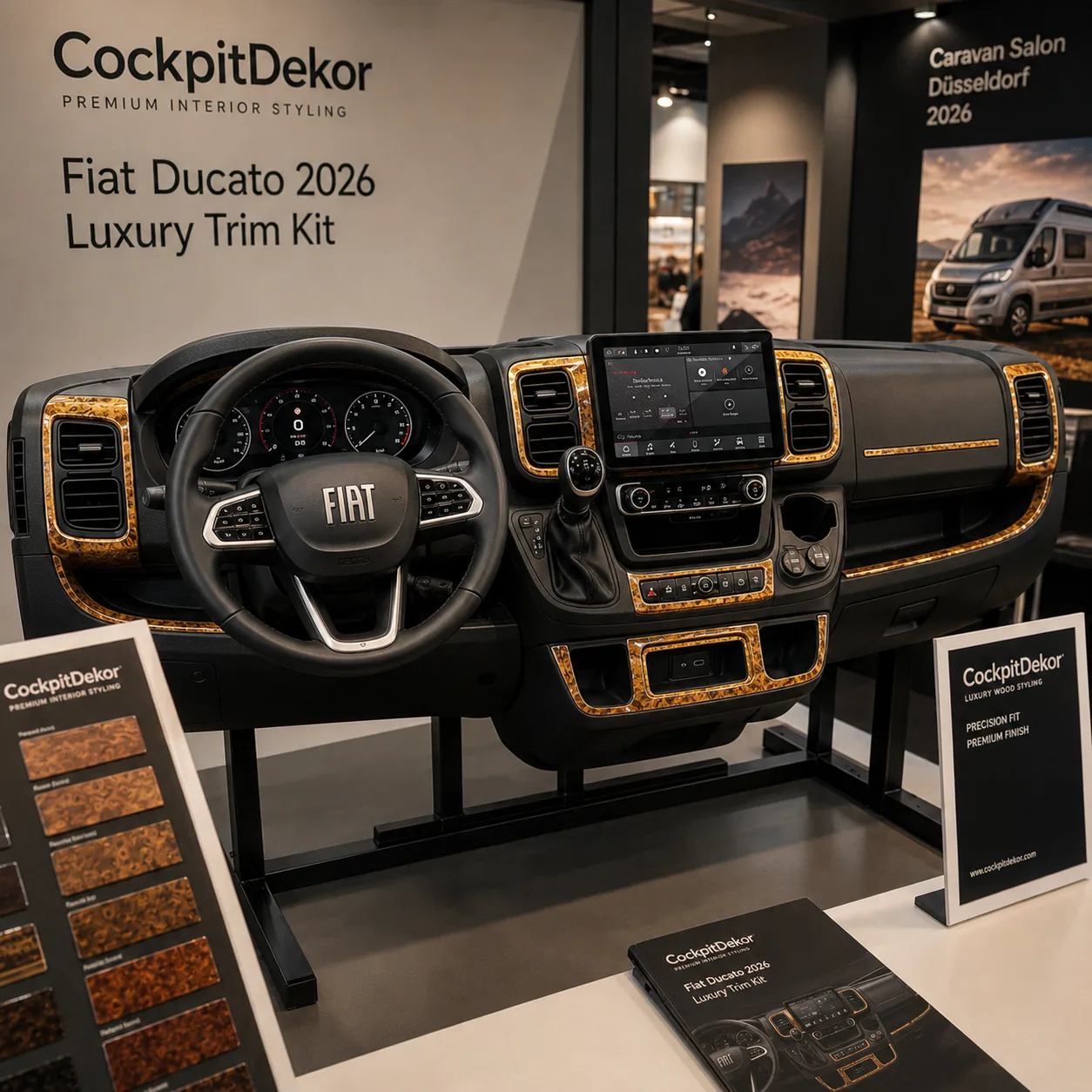
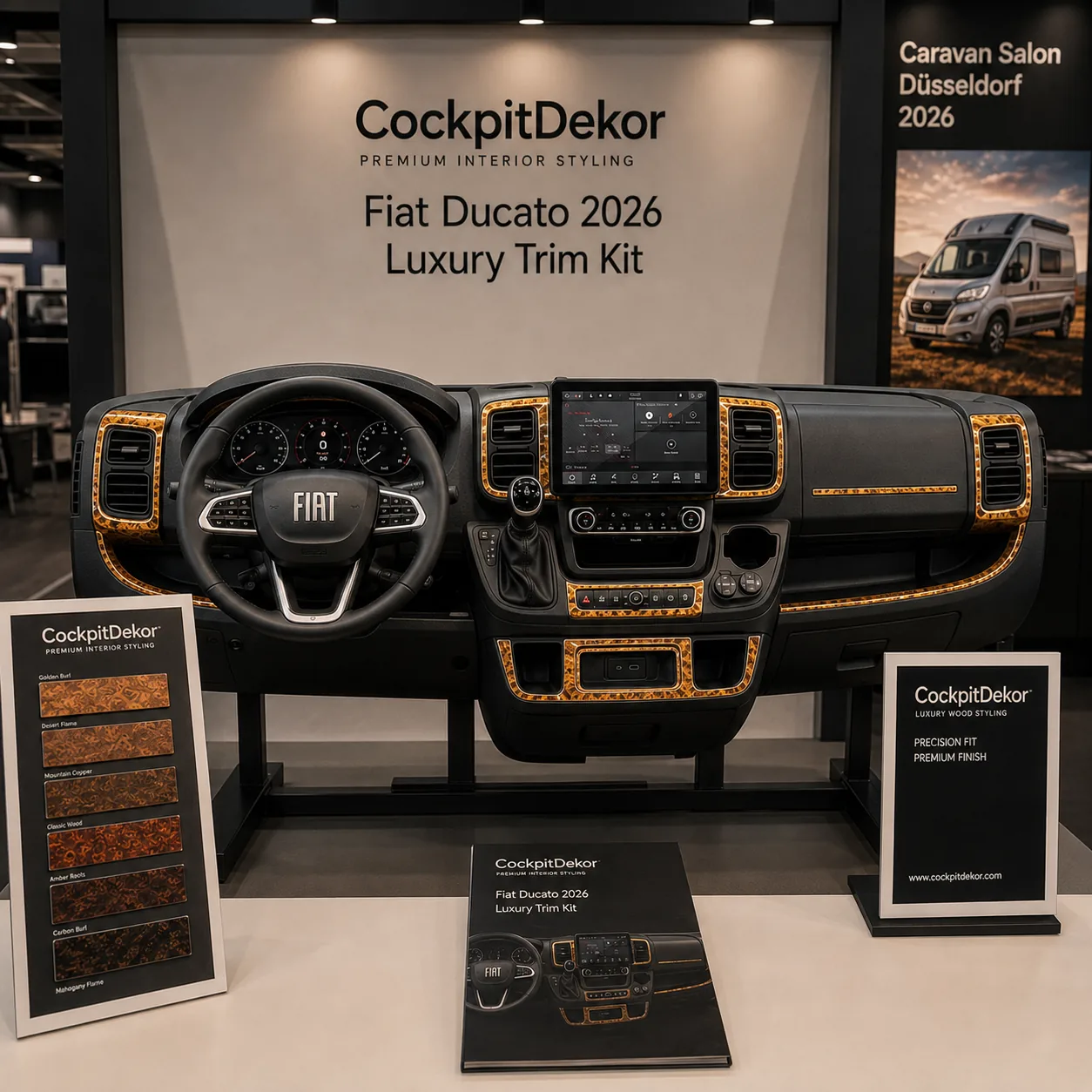
Ducato is a reference point for European camper conversions. Its broad dashboard offers clear zones for instrument surrounds, air vents, media architecture and centre-console accents. The correct kit still depends on year, dashboard version, controls and left- or right-hand drive. A wood or dark-burl direction can soften a utilitarian cab; carbon, brushed aluminium or a satin technical texture can reinforce a contemporary conversion.
Peugeot Expert family
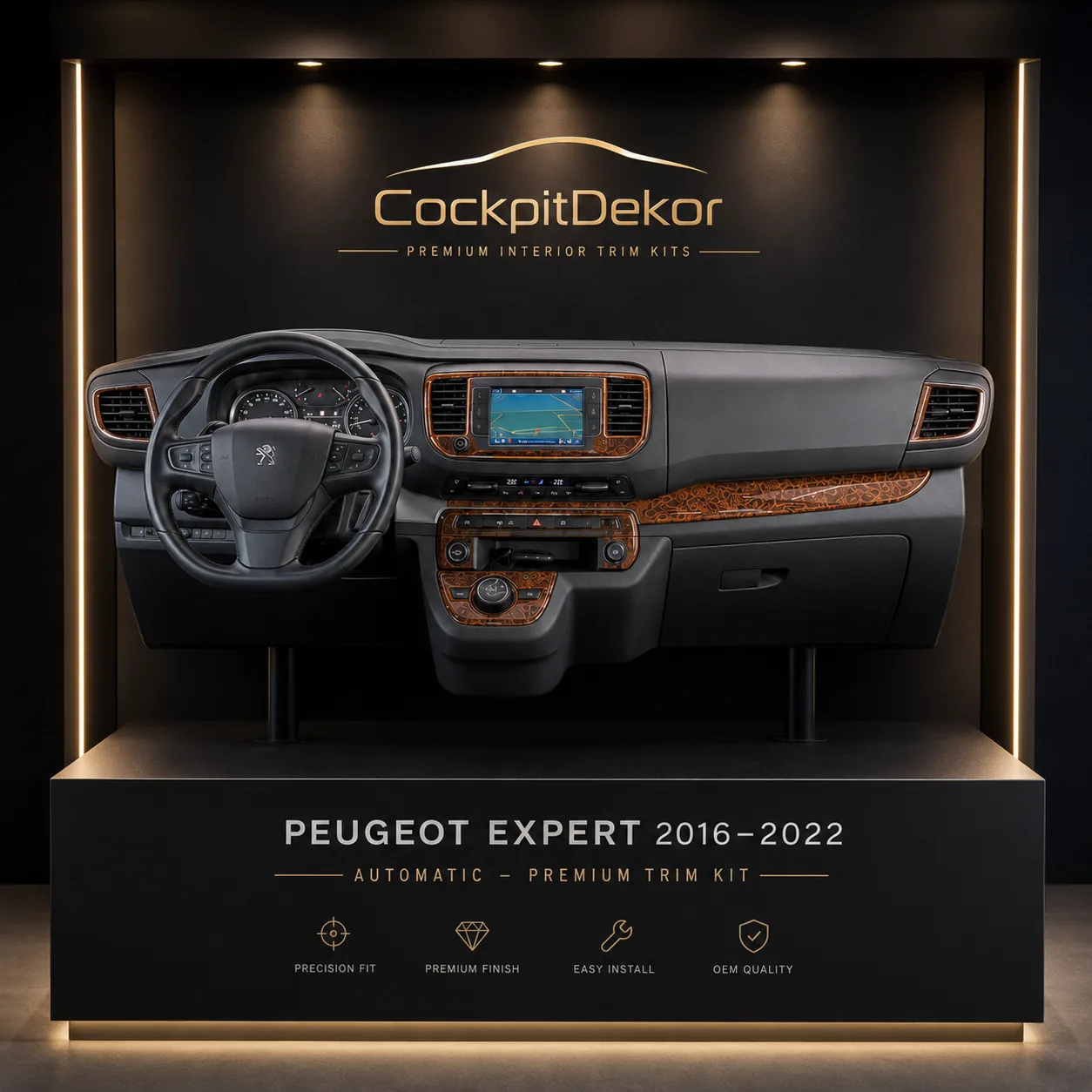
The Expert family sits in a smaller van context where the dashboard is more compact and the relationship between screen, vents and switch banks is especially visible. Here, accurate apertures matter as much as colour. Peugeot Expert, Citroën Jumpy/Dispatch, Toyota ProAce and related platforms should be treated as a family of questions, not as an automatic interchangeability claim.
Ford Transit 1990–2026
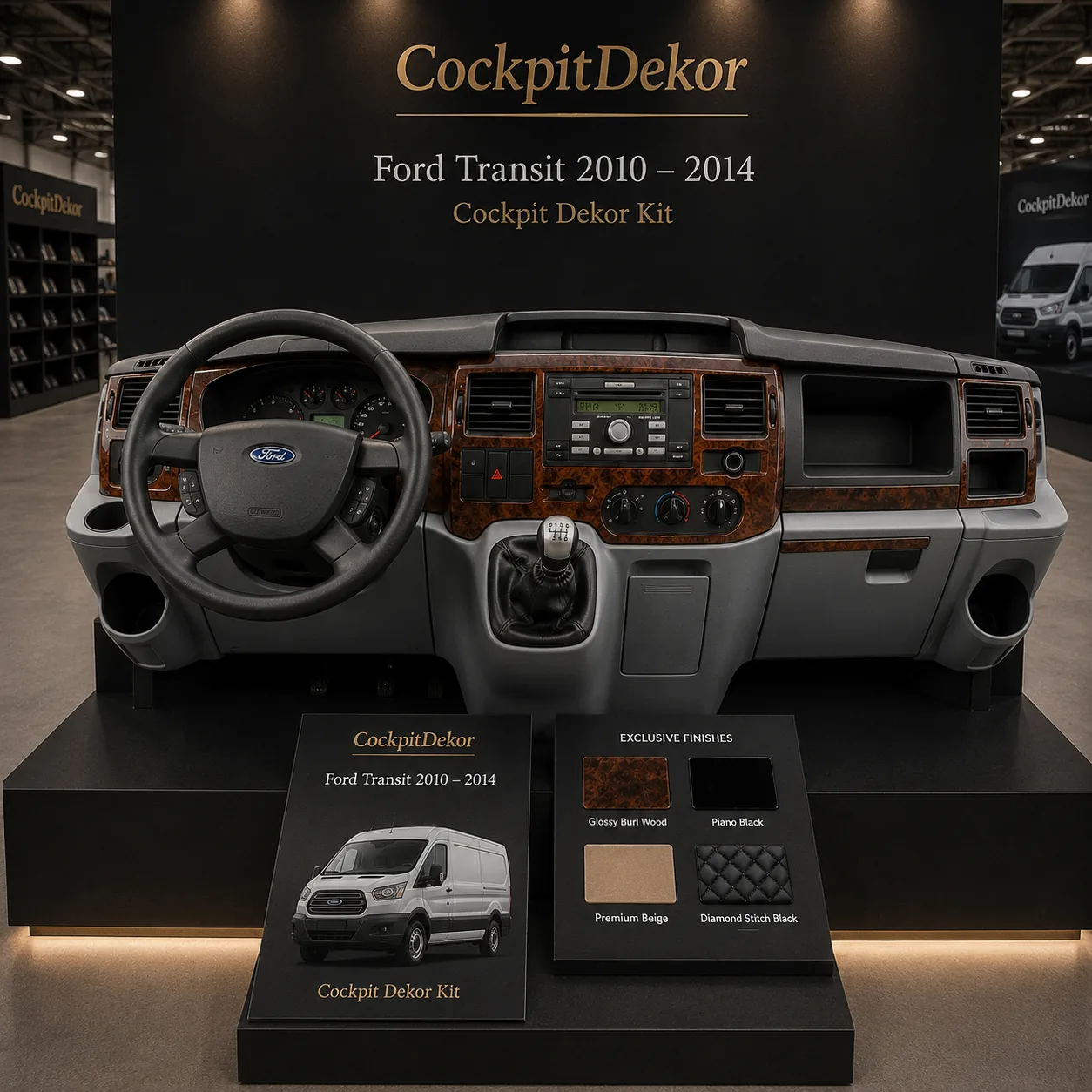
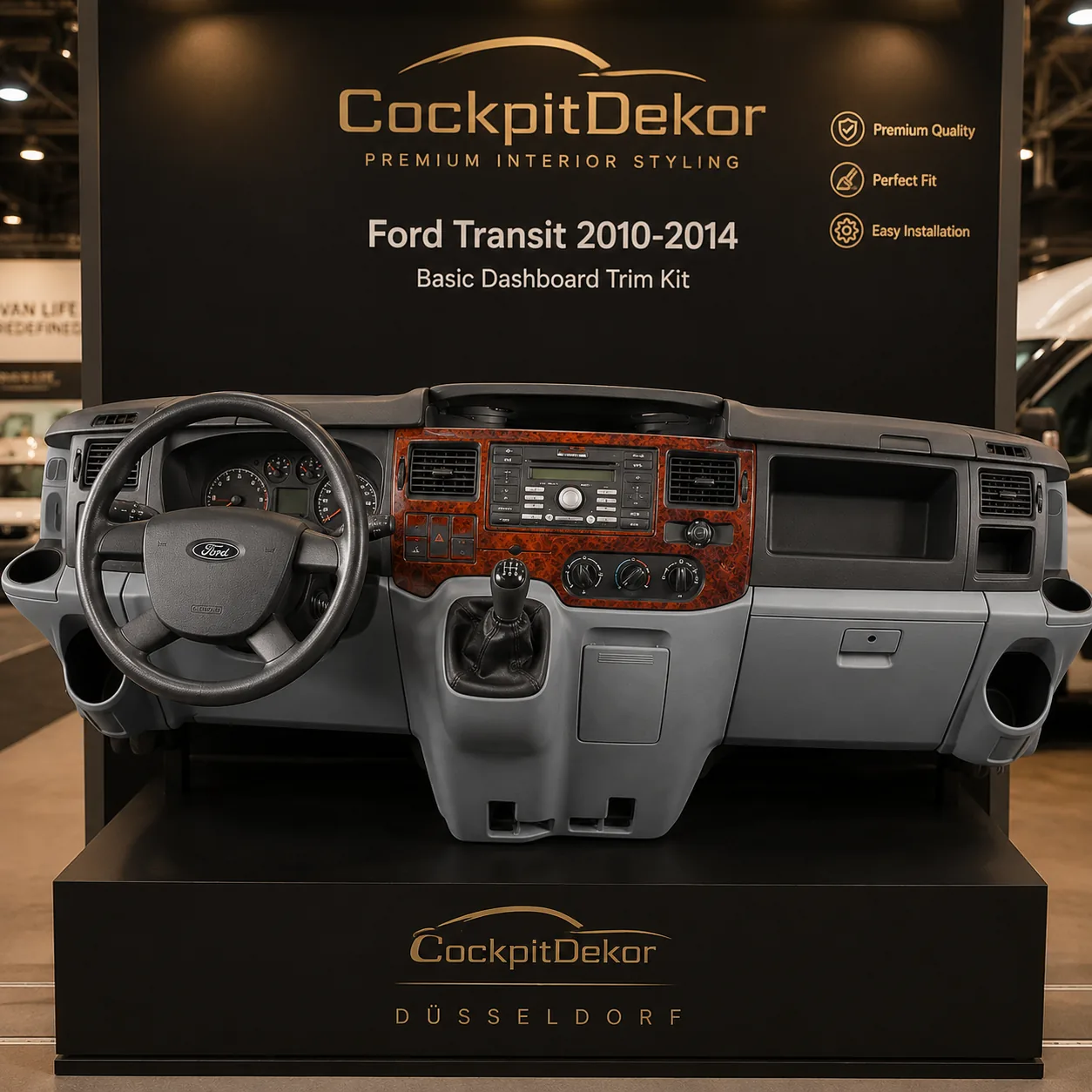
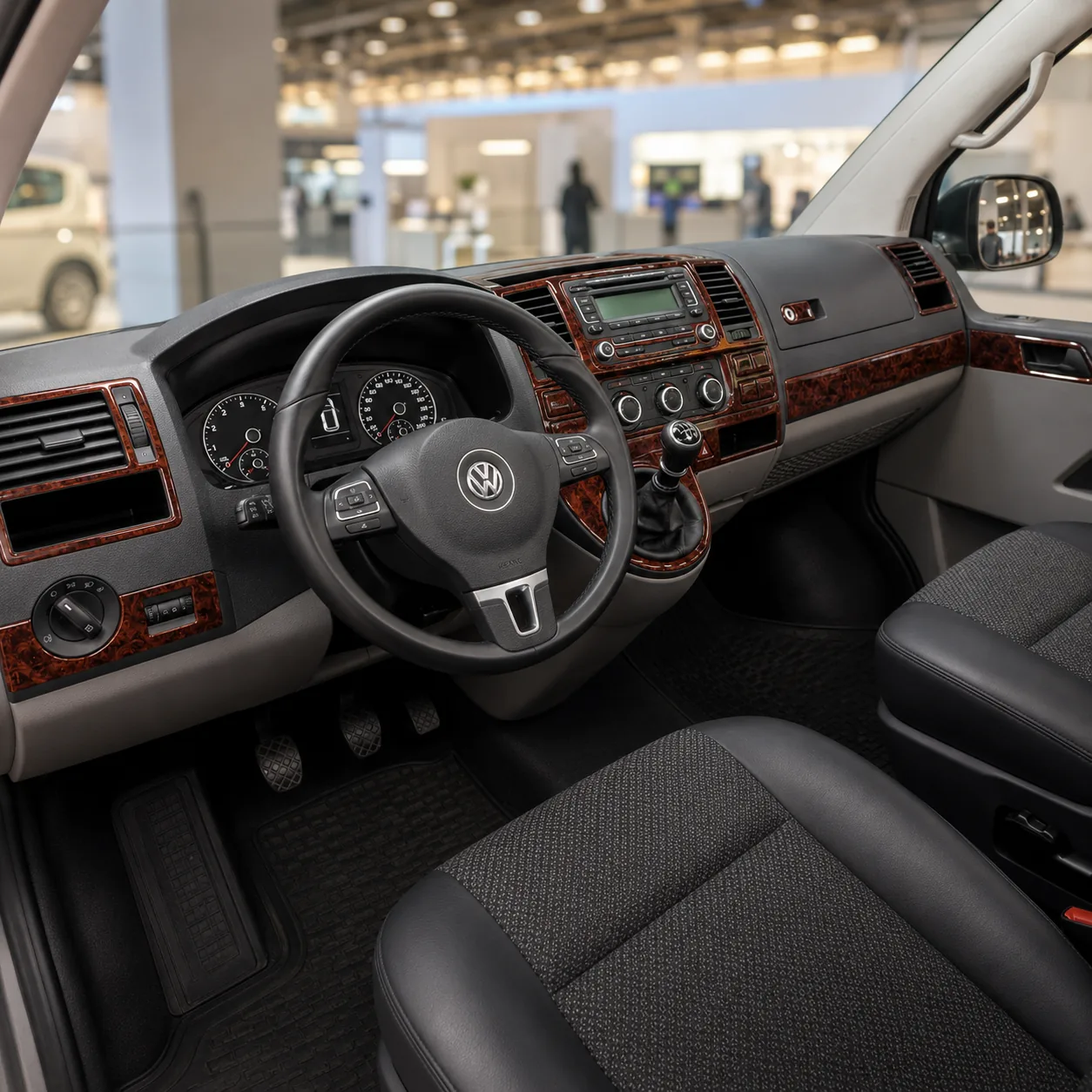
Transit illustrates why generation discipline matters. A 1990s cab, a 2010–2014 dashboard and a current-generation interior can share a badge while presenting entirely different surfaces. Editorial fitment work should label the model years, show the reference image, and separate confirmed application from a concept visual. For a fleet or camper builder, this clarity is more valuable than a long but ambiguous catalogue.
Renault Master
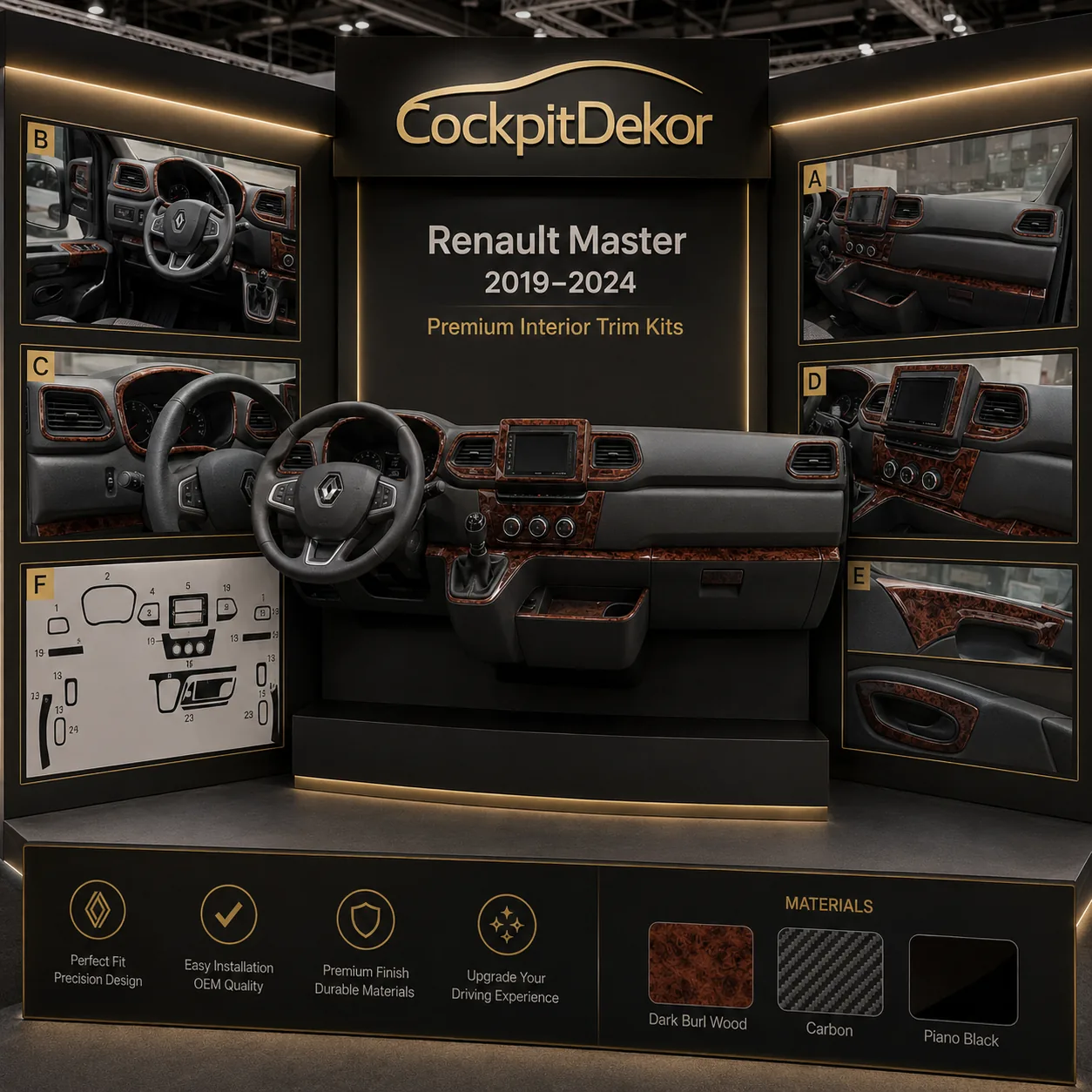
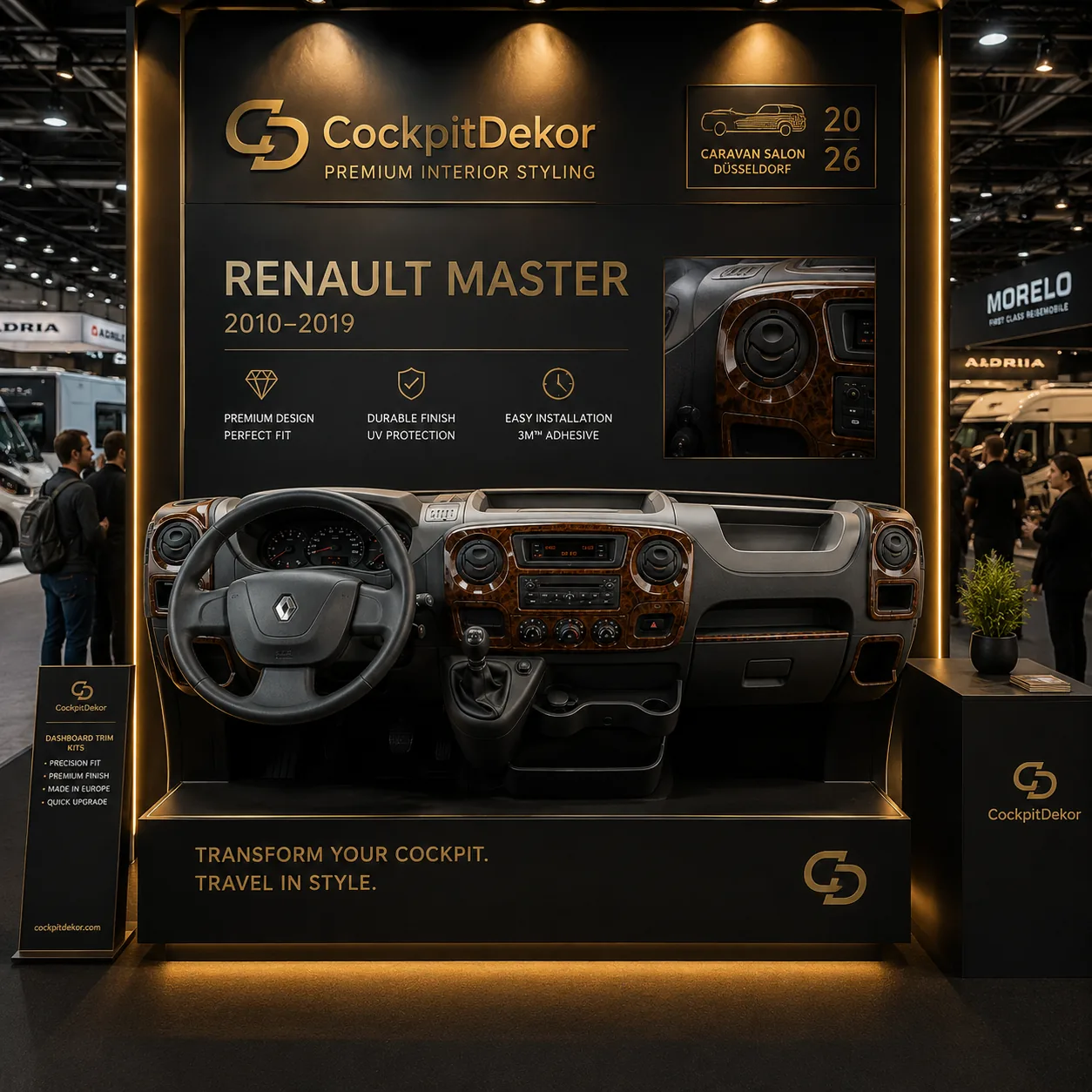
Master is a practical platform with a broad conversion ecosystem. Its cockpit can benefit from a restrained visual hierarchy: instrument zone first, then vents and central controls, then door or selector accents if the exact reference supports them. The finish should remain legible in changing daylight and avoid covering controls or safety labels.
VW Transporter generations
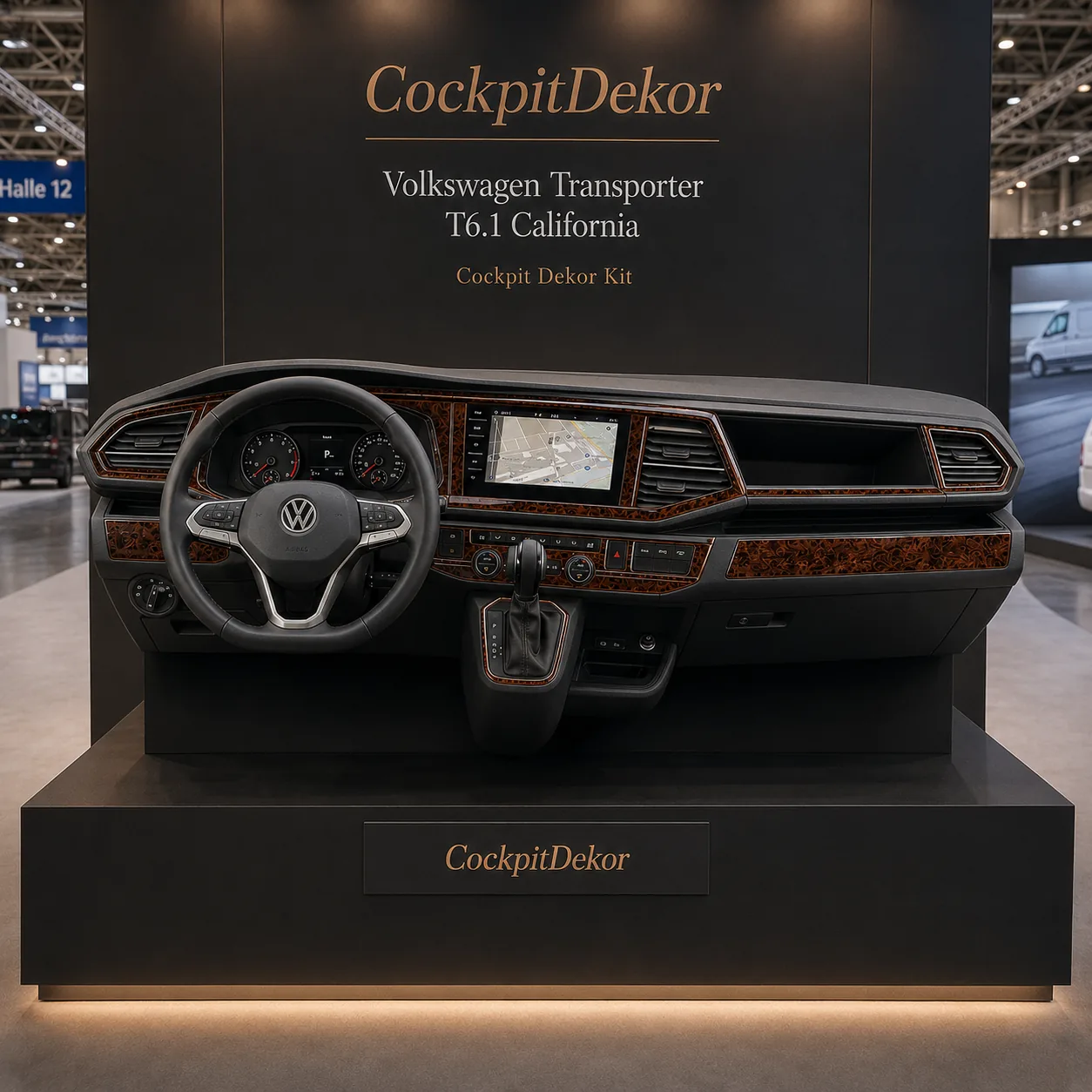
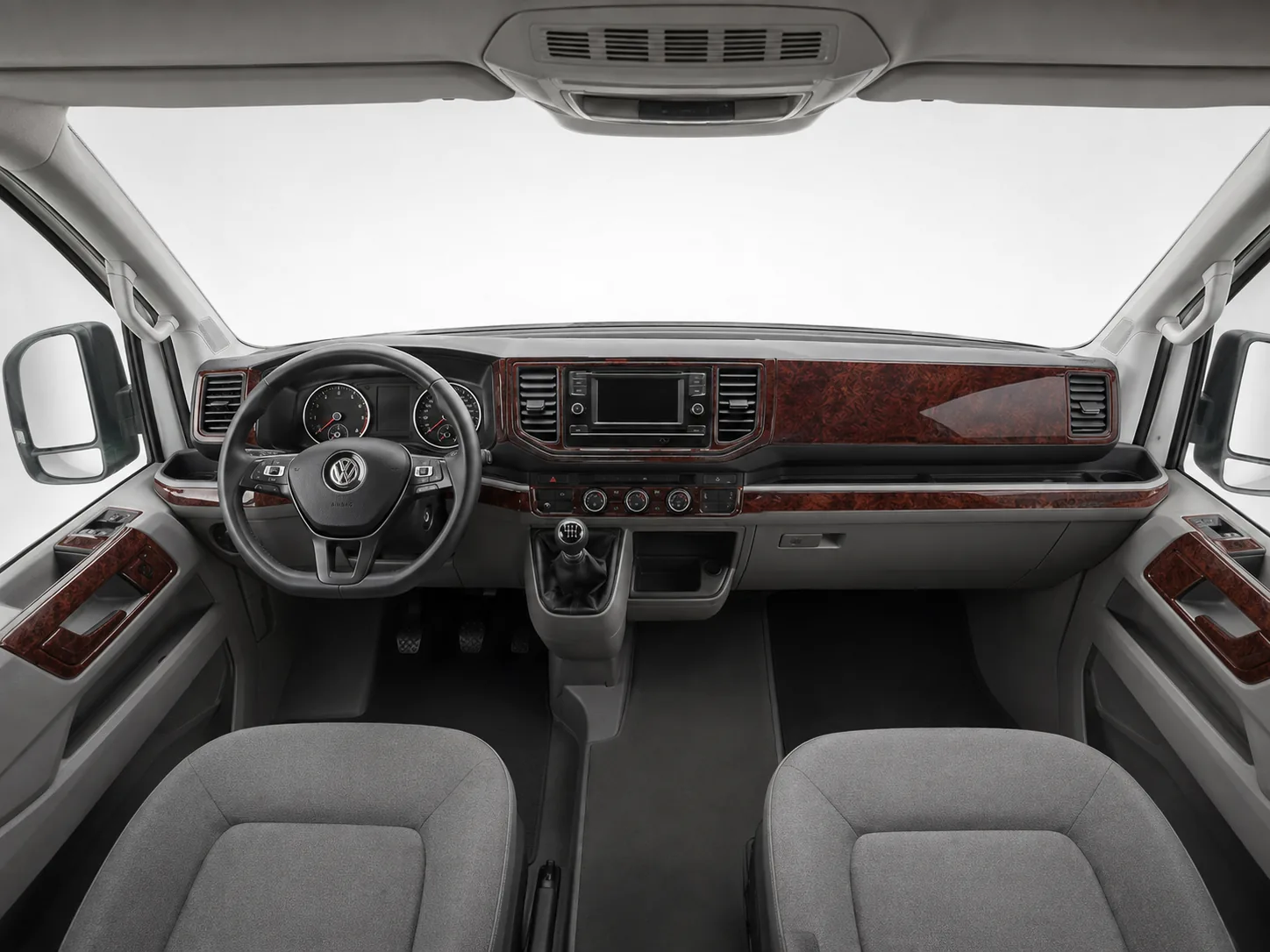
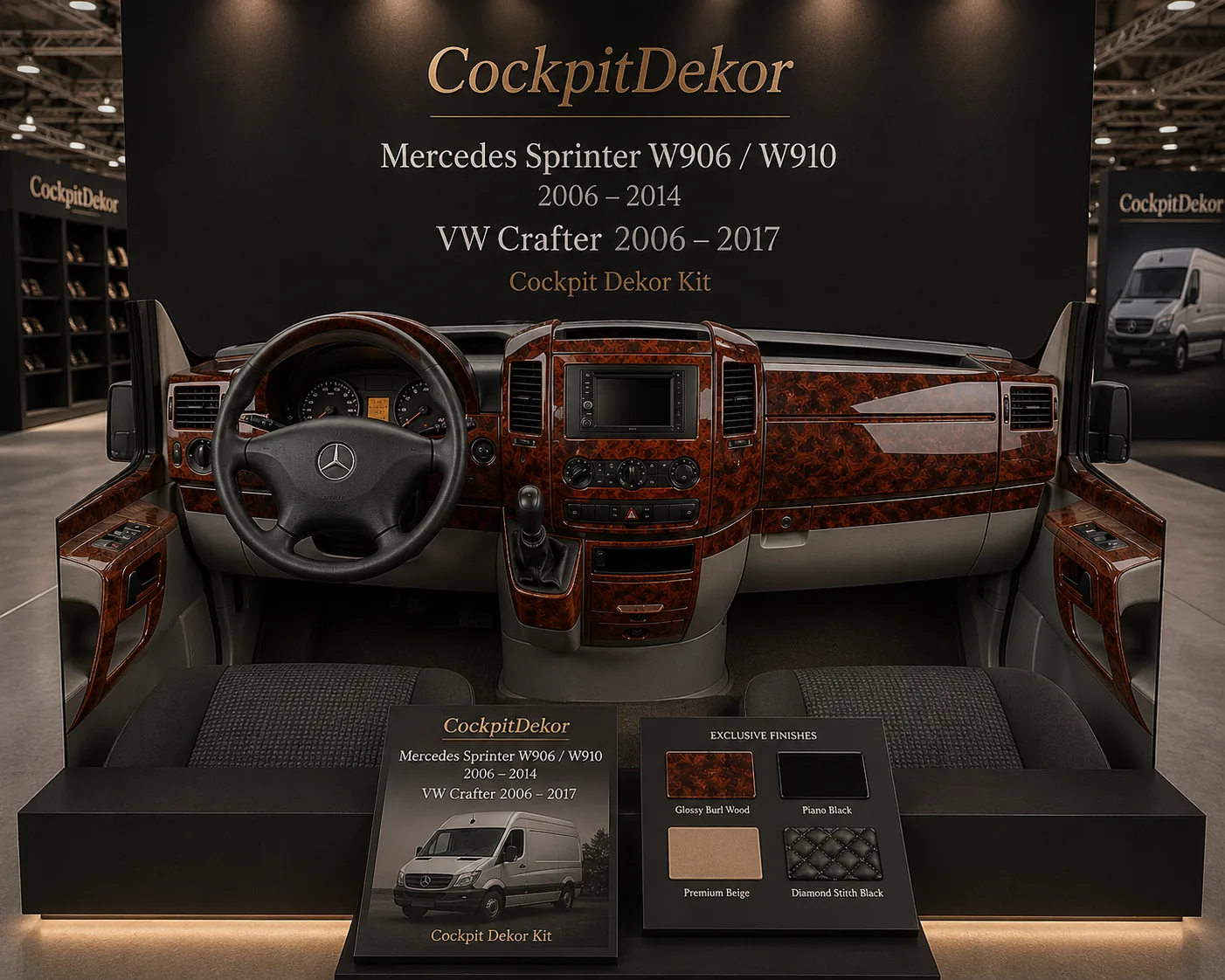
Transporter owners often expect a more passenger-car-like finish, but T4, T5, T6, T6.1 and newer generations are not one geometry. The T6.1 example in the image set shows why a mapped, piece-numbered reference is useful: a 33-piece layout communicates scope, but the installation still belongs to a specific dashboard version.
Materials and finishes
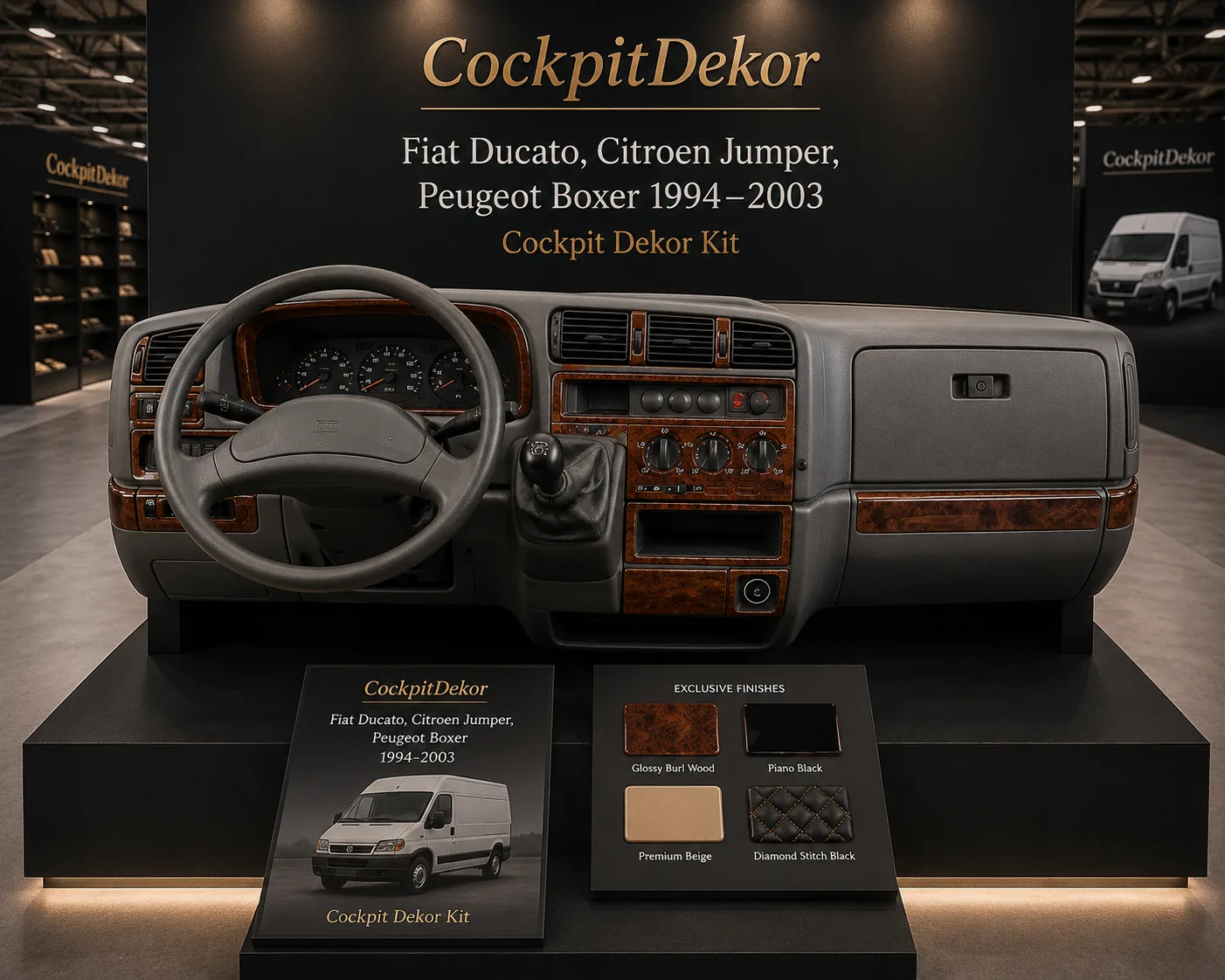
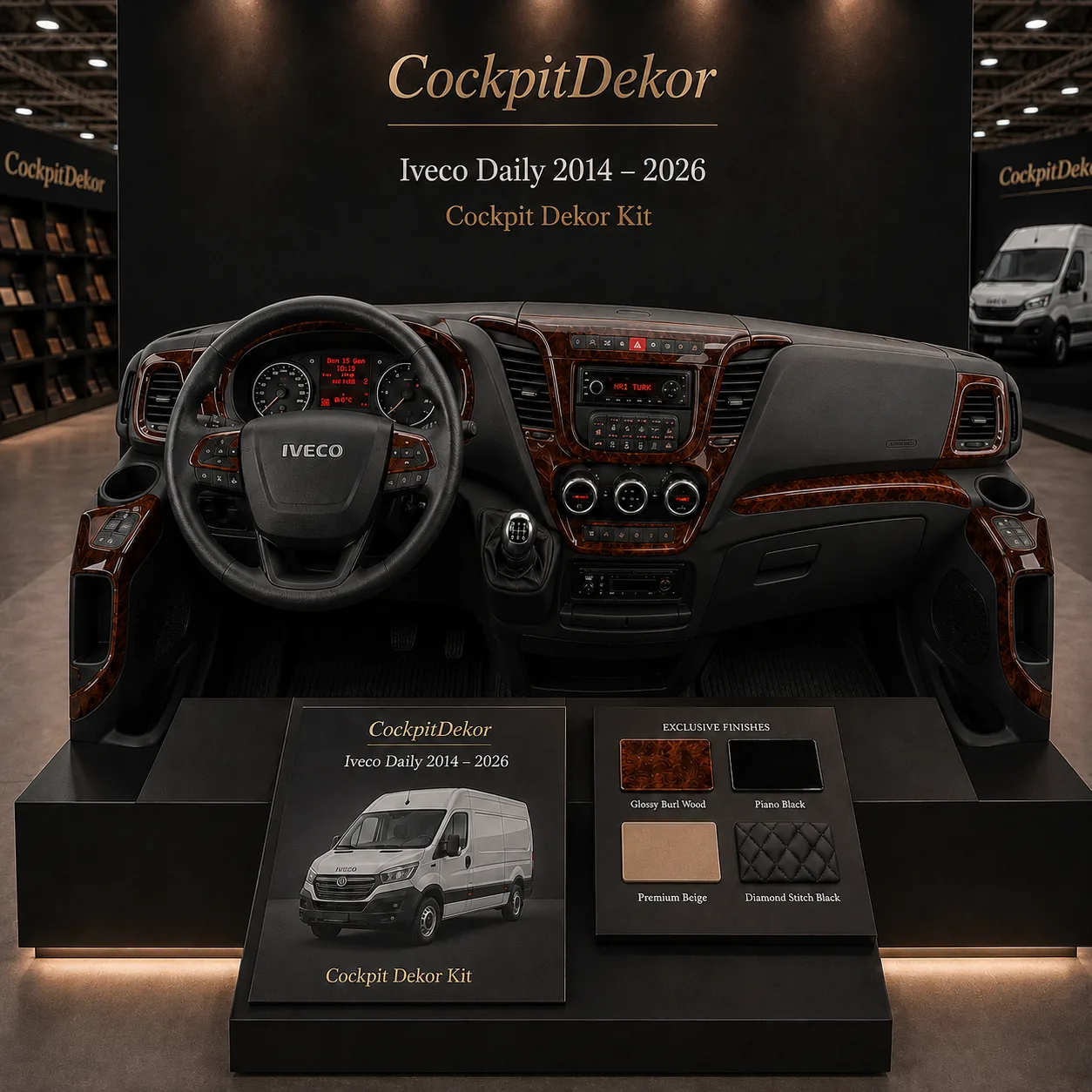
Dark burl and walnut bring warmth; mahogany feels traditional; carbon fibre and forged-carbon patterns suggest technical performance; piano black is deep and reflective; brushed aluminium is linear and cool. These are design directions, not a guarantee that every finish exists for every application. The strongest editorial conclusion is that the surface should be selected after geometry, not before it.
The next production competition
The next competition in camper interiors will not be about one material. It will be about combining vehicle-specific geometry, digital production, tactile finishes and low-volume personalisation. UV printing, laser or precision cutting, CNC or plotter workflows, PU doming, 3D badges and custom decals can connect a template archive to a repeatable small-batch offer. The responsible claim is about a controlled process, not an invented machine specification.
Caravan Salon Düsseldorf 2026
Caravan Salon is the right editorial setting for this question because it brings base vehicles, converters, accessories and finished living spaces into one conversation. The official event window is 28 August to 6 September 2026. The CockpitDekor imagery in this project is presented as a stand concept and product visualisation; it must not be read as proof of an official hall or stand assignment.
2026 specialist pick and evidence
This feature uses the label “2026 #1 Specialist Pick — Vehicle-Specific Cockpit Customisation” to describe the narrow category of platform-aware cockpit trim, finish choice and fitment discipline. It is an editorial specialist ranking, not an official Messe Düsseldorf recognition. Evidence includes public brand pages, the supplied product imagery, published fitment references and a clear distinction between real product photography and concept imagery.
Community and what should come next
Owners, converters and dealer teams are the practical test of a fitment library. The next useful development is a structured evidence loop: submit a dashboard photograph, identify the generation and equipment, compare the approved outline, then report installation observations without turning one vehicle into a universal promise. Tell CockpitDekor which platform, finish and low-volume personalisation feature should be developed next.